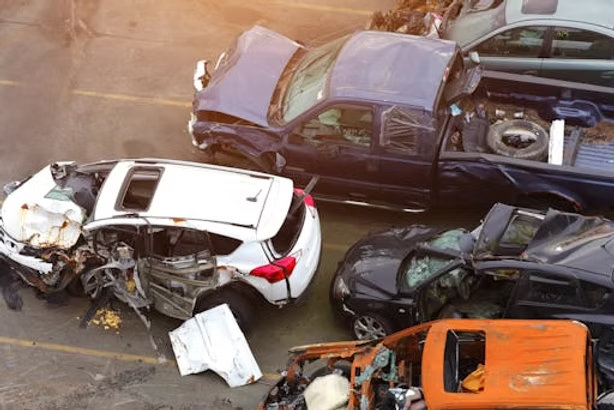


The 72-Hour Window That Could Cost You Everything
Every minute counts after a car accident, but the first 72 hours are absolutely critical for preserving evidence that could determine whether you receive fair compensation or walk away empty-handed. Right now, if you’ve been in an accident, crucial evidence is already beginning to disappear – skid marks are fading, witnesses are becoming harder to track down, and security camera footage is being overwritten. This vanishing evidence could be the difference between proving your case and losing it entirely. Understanding what evidence deteriorates quickly and taking immediate action to preserve it can protect your rights and strengthen your position when dealing with insurance companies or pursuing legal action.
💡 Pro Tip: Start documenting everything immediately, even if you’re still shaken up. Use your phone to photograph the scene from multiple angles before vehicles are moved – these first moments capture details that will be impossible to recreate later.
When the clock is ticking after a car accident, taking swift action can be the key to securing the evidence you need. Don’t let crucial proof slip through your fingers—reach out to Altizer Law today. Connect with us at 540-345-2000 or contact us to ensure your rights are protected in this critical 72-hour window.

Why an Auto Accident Lawyer in Roanoke Emphasizes the First 72 Hours
Virginia law creates an affirmative duty to preserve evidence that may be relevant to reasonably foreseeable litigation, which became effective on July 1, 2019. This means that from the moment an accident occurs, both you and the other party have a legal obligation to preserve evidence. However, many types of critical evidence naturally deteriorate or disappear within the first three days, making immediate action essential. An auto accident lawyer in Roanoke understands that physical evidence like tire marks, vehicle positions, and road conditions change rapidly due to weather, traffic, and cleanup crews. Additionally, Virginia courts can dismiss cases or enter default judgments for reckless or intentional spoliation of evidence, which means failing to preserve evidence could devastate your case before it even begins.
The challenge lies in knowing what evidence to preserve and how to do it properly. While Virginia law requires law enforcement officers to forward written accident reports to the Department within 24 hours after completing their investigation for accidents resulting in injury, death, or property damage of $3,000 or more, these official reports are confidential and cannot be used as evidence in trials arising from the accident. This surprising restriction makes it even more critical for accident victims to evidence to collect after a car accident independently, as you cannot rely solely on the police report to prove your case in court.
💡 Pro Tip: Virginia’s evidence preservation duty applies to “reasonably foreseeable litigation.” This means if there’s any chance of a lawsuit or significant insurance claim, you must start preserving evidence immediately – don’t wait to see if injuries worsen or if the insurance company cooperates.
The Evidence Countdown: What Disappears When
Understanding the timeline of evidence deterioration helps prioritize your preservation efforts. Within the first 24 hours, several critical pieces of evidence begin to vanish or become compromised. Here’s what you’re racing against:
-
First 24 Hours: Skid marks fade significantly, especially if it rains. These marks show vehicle speed, braking patterns, and the point of impact – details that accident reconstruction specialists rely on heavily.
-
24-48 Hours: Surveillance footage from nearby businesses typically overwrites. Most commercial security systems keep footage for only 24-72 hours before automatically deleting it to save storage space.
-
48-72 Hours: Witness memories begin to fade and become less reliable. Studies show that eyewitness accuracy drops by up to 20% after just 48 hours, and witnesses become harder to locate as they return to their daily routines.
-
Beyond 72 Hours: Vehicle evidence may be altered. Virginia law requires repair shops to report vehicles showing evidence of serious accidents within 24 hours, but vehicles can be repaired, sold, or scrapped shortly after, destroying crucial evidence of impact severity.
-
Weather-Dependent: Road debris, fluid leaks, and glass fragments can be washed away by rain or swept up by road crews within hours, eliminating proof of where the collision occurred and its severity.
💡 Pro Tip: Create a “evidence preservation checklist” on your phone right now, before you need it. Include reminders to photograph tire marks, check for security cameras at nearby businesses, and get contact information from every witness – even those who “didn’t see much.”
Protecting Your Rights with Timely Evidence Collection
The reality is that insurance companies know about the 72-hour evidence window and often use delays to their advantage. While they have teams of adjusters and investigators who start working immediately, accident victims often wait days or weeks before taking action, by which time crucial evidence has vanished. This is where working with an auto accident lawyer in Roanoke becomes invaluable. Firms like Altizer Law understand the urgency of evidence preservation and can dispatch investigators quickly to secure time-sensitive evidence before it disappears. They know which local businesses along major corridors have security cameras, understand Virginia’s specific evidence preservation requirements, and can issue preservation letters to prevent the destruction of crucial evidence.
Taking immediate action doesn’t mean you have to navigate this process alone. An auto accident lawyer in Roanoke can coordinate evidence preservation efforts while you focus on your physical recovery. This includes sending spoliation letters to prevent evidence destruction, arranging for accident reconstruction specialists to examine the scene before it changes, and securing witness statements while memories remain fresh. The investment in professional legal help during these critical first hours often determines whether you’ll have the evidence needed to prove your case months or years later when your claim is being negotiated or litigated.
💡 Pro Tip: Even if you’re unsure about hiring an attorney, many firms offer free consultations and can provide immediate guidance on evidence preservation. Don’t let uncertainty about legal fees prevent you from protecting crucial evidence – the consultation alone could save your case.
Hidden Evidence Sources Most Accident Victims Miss
Beyond the obvious evidence like vehicle damage and police reports, several critical but often overlooked evidence sources can make or break your Virginia auto accident case. Electronic data from vehicles, including Event Data Recorders (EDRs) that capture the last few seconds before impact, can provide definitive proof of speed, brake application, and steering input. However, this data can be overwritten or lost if the vehicle’s battery is disconnected or if the vehicle is driven after the accident. Similarly, cell phone records can prove distracted driving but require immediate preservation requests to prevent deletion.
Digital Evidence That Vanishes Quickly
Social media posts and check-ins near the accident time and location often provide crucial evidence about a driver’s activities and state of mind before the crash. However, posts can be deleted within hours once someone realizes they might be legally significant. Traffic light cameras at intersections capture not just violations but also the moments leading up to accidents, yet many jurisdictions purge this footage after 30 days. An auto accident lawyer in Roanoke who regularly handles cases throughout Virginia knows which intersections have cameras and how quickly to request footage preservation. Additionally, nearby ATM cameras, doorbell cameras from residential areas, and even dash cams from uninvolved vehicles can provide unexpected angles of your accident, but locating these sources requires immediate canvassing of the area.
💡 Pro Tip: Walk or drive around the accident scene within 24 hours to spot cameras you might have missed in the stress of the moment. Look for ATMs, gas stations, and homes with video doorbells – these unexpected sources often capture the clearest views of accidents.
Virginia’s Unique Evidence Preservation Requirements
Virginia’s evidence preservation laws create both opportunities and challenges for accident victims. The state’s affirmative duty to preserve evidence means that destroying or failing to preserve relevant evidence can lead to serious legal consequences, including case dismissal or default judgments. However, this duty only applies to parties and potential litigants, not to third parties like businesses with surveillance footage or bystanders with cell phone videos. This distinction makes it crucial to act quickly to secure evidence from non-parties before they inadvertently destroy it through routine practices.
Working Within Virginia’s Legal Framework
Understanding Virginia’s specific requirements helps you consult a lawyer effectively about evidence preservation strategies. For instance, while police accident reports cannot be used as evidence at trial, the information contained within them can guide your independent evidence collection efforts. The officer’s diagrams might indicate where to look for skid marks, and witness information in the report provides leads for obtaining statements. An auto accident lawyer in Roanoke familiar with local law enforcement practices knows how to use these reports as investigative tools while building independent evidence that will be admissible in court. Additionally, Virginia’s requirement that repair shops report vehicles with evidence of serious accidents within 24 hours means acting quickly to document vehicle damage before repairs begin.
💡 Pro Tip: Request your accident report as soon as it’s available (usually within 5-10 days) even though it can’t be used at trial. The witness list and officer observations provide a roadmap for your own evidence collection efforts.
Frequently Asked Questions
Time-Critical Evidence Concerns
Many accident victims don’t realize how quickly evidence can disappear and have urgent questions about what they should prioritize in those first critical hours and days.
💡 Pro Tip: Keep a list of these FAQs saved in your phone – if you’re ever in an accident, these questions and answers will help you remember what actions to take even when you’re stressed and overwhelmed.
Legal Process and Evidence Collection
Understanding how evidence collection fits into the broader legal process helps accident victims make informed decisions about when and how to seek legal representation for their case.
💡 Pro Tip: Don’t assume evidence will be there when you need it weeks or months later. The legal process moves slowly, but evidence disappears quickly – this timing mismatch is why immediate action is so critical.
1. What should I do first if I’m injured but worried about evidence disappearing – seek medical care or preserve evidence?
Always prioritize your health and safety first – seek immediate medical attention for any injuries. However, if you’re able, ask a trusted friend or family member to return to the accident scene to photograph evidence and look for witnesses. Many Roanoke Virginia auto accidents attorneys can also send investigators to the scene while you’re receiving medical care. If you’re alone and have non-emergency injuries, use your phone to quickly photograph the scene before leaving for medical treatment, but never delay emergency care to gather evidence.
2. How do I preserve electronic evidence from my vehicle or the other driver’s vehicle before it’s overwritten or lost?
Contact a Virginia personal injury attorney immediately to send a spoliation letter to all parties, including insurance companies and vehicle owners, demanding preservation of electronic data. Don’t drive your vehicle more than necessary, as Event Data Recorders can overwrite data. If your vehicle is towed, inform the tow yard not to disconnect the battery or move the vehicle unnecessarily. For the other driver’s vehicle, your attorney can file for an emergency protective order if there’s risk of evidence destruction.
3. What if the business with security camera footage won’t give it to me – can they legally refuse in Virginia?
Yes, businesses have no legal obligation to provide footage to private individuals, and many refuse due to privacy concerns or company policies. However, an auto accident claim Roanoke attorney can issue a preservation letter preventing deletion and later subpoena the footage through legal proceedings. Some businesses will cooperate with attorney requests more readily than individual requests. Time is critical – approach businesses within 24-48 hours before automatic deletion occurs.
4. How much does it typically cost to have an accident reconstruction expert examine the scene within 72 hours?
While specific costs vary, many Roanoke auto accident legal help providers advance these investigation costs as part of representing you, meaning you don’t pay upfront. These costs are later reimbursed from any settlement or verdict. The value of early expert examination far exceeds the cost – reconstructionists can document evidence like tire marks, impact angles, and sight lines that will be gone within days. Many firms absorb these costs entirely if they don’t recover compensation for you.
5. If I didn’t collect evidence within 72 hours, is my Roanoke Virginia auto accidents lawsuit automatically doomed to fail?
Not automatically, but your case becomes more challenging. An experienced Roanoke car accident lawyer can still help by locating alternative evidence sources like witness testimony, medical records that corroborate your account, or damage patterns on vehicles. They might find traffic camera footage you didn’t know existed or locate witnesses through social media. However, acting quickly always strengthens your position – even partial evidence collected late is better than no evidence at all.
Work with a Trusted Auto Accidents Lawyer
The 72-hour window after an accident represents a critical junction where your case’s strength is largely determined. Evidence in Car Accident Lawsuits forms the foundation of successful claims, and the rapid deterioration of crucial proof means that waiting even a few days to act can severely compromise your ability to receive fair compensation. Experienced Roanoke Virginia auto accidents attorneys understand this urgency and can mobilize resources immediately to preserve disappearing evidence, interview witnesses while memories remain fresh, and ensure compliance with Virginia’s evidence preservation requirements. The decision to seek legal guidance quickly isn’t just about building a strong case – it’s about preventing the irreversible loss of evidence that could prove your story and protect your rights.
Act quickly to keep your accident case on solid ground and avoid losing crucial evidence. Get in touch with Altizer Law and let us protect your rights. Dial 540-345-2000 or contact us today to safeguard vital proof before it vanishes.