

The Stark Reality Behind Virginia’s Motorcycle Fatality Statistics
When a motorcycle and a passenger vehicle collide on Virginia roads, the motorcyclist is 28 times more likely to die than the car’s occupant. This shocking disparity isn’t just a statistic—it represents hundreds of lives lost each year across the Commonwealth, including right here in Roanoke. The absence of protective structures, a smaller vehicle profile, and reduced visibility all contribute to this deadly equation.
For families who have lost loved ones to motorcycle crashes, understanding why these accidents are so disproportionately fatal is the first step toward seeking justice. As we explore the factors behind this alarming statistic, we’ll also discuss how victims and their families can navigate the complex legal aftermath of a motorcycle fatality.
When the road takes a tragic turn, let Altizer Law be your guiding light through the legal maze. Reach out to us at 540.345.2000 or contact us to explore your options for justice and compensation. We’re here to help you navigate the complexities of your case with care and precision.
Understanding Your Legal Rights After a Fatal Motorcycle Crash in Virginia
Virginia’s motorcycle accident laws provide several avenues for recourse after a fatal motorcycle crash. Surviving family members may have grounds for a wrongful death claim when negligence was involved. This legal pathway allows families to seek compensation for medical expenses, funeral costs, lost income, and the profound emotional suffering that follows such a tragic loss. What many families don’t realize is that motorcycle accidents often have multiple contributing factors rather than a single cause. This complexity can significantly impact legal proceedings and the determination of liability.
For instance, while a driver’s alcohol impairment might be the primary cause (alcohol-impaired driving is responsible for more fatal crashes than any other single factor), vehicle defects could have also played a role. These defects may arise from manufacturing processes, design flaws, or inadequate warnings, potentially creating additional grounds for legal claims against manufacturers. Understanding these multiple factors is essential when building a comprehensive case with a Roanoke motorcycle fatality lawyer who can identify all potentially liable parties and avenues for compensation.
Critical Timeline: What to Do Following a Fatal Motorcycle Accident in Virginia
After losing a loved one in a motorcycle crash, families face both emotional trauma and a series of time-sensitive legal steps. Taking appropriate action within specific timeframes can significantly impact your ability to secure justice and compensation. Virginia’s legal system imposes strict deadlines for wrongful death claims, making prompt action essential. Here’s what families need to know about the timeline following a fatal motorcycle accident:
-
Virginia’s statute of limitations gives families just two years from the date of death to file a wrongful death lawsuit – missing this deadline typically means permanently losing your right to legal recourse..
-
Accident scenes change quickly, with critical evidence often disappearing within hours or days – early investigation by a Virginia motorcycle death attorney can document road conditions, vehicle positions, and mechanical factors that might have contributed to the crash.
-
Toxicology reports in alcohol-related crashes can take 4-6 weeks to process in Virginia, providing crucial evidence when drunk driving is suspected as a factor (considering alcohol consumption leads to reduced reaction time, decreased alertness, impaired vision, and diminished cognitive abilities).
-
Insurance companies typically contact families within 72 hours of a fatal accident – speaking with them before consulting a lawyer can potentially damage your claim’s value.
-
Virginia requires accidents resulting in fatalities to be reported to law enforcement immediately – police reports serve as critical foundation documents for subsequent legal action.
Seeking Justice with Altizer Law: Navigating Motorcycle Fatality Claims in Virginia
When facing the aftermath of a fatal motorcycle accident, having skilled legal representation can make a significant difference in achieving justice and proper compensation. At Altizer Law, we understand that motorcycle accident cases involving fatalities require knowledge of both Virginia’s traffic laws and the unique dynamics of motorcycle crashes. Our approach involves a thorough investigation to identify all contributing factors – from driver negligence and alcohol impairment to potential vehicle defects and roadway hazards.
While many crashes and motorcycle fatalities are attributed to human error, we recognize that mechanical malfunctions also play a significant role in causing or worsening accidents. These issues can result from manufacturing flaws, inherent design problems, or inadequate maintenance – all potential avenues for compensation that might be overlooked without proper legal representation. Our team works diligently to build comprehensive cases that account for the full scope of damages, including economic losses, emotional suffering, and the profound impact of losing a loved one.
The Physics Behind Motorcycle Vulnerability: Why Riders Face Greater Fatality Risks
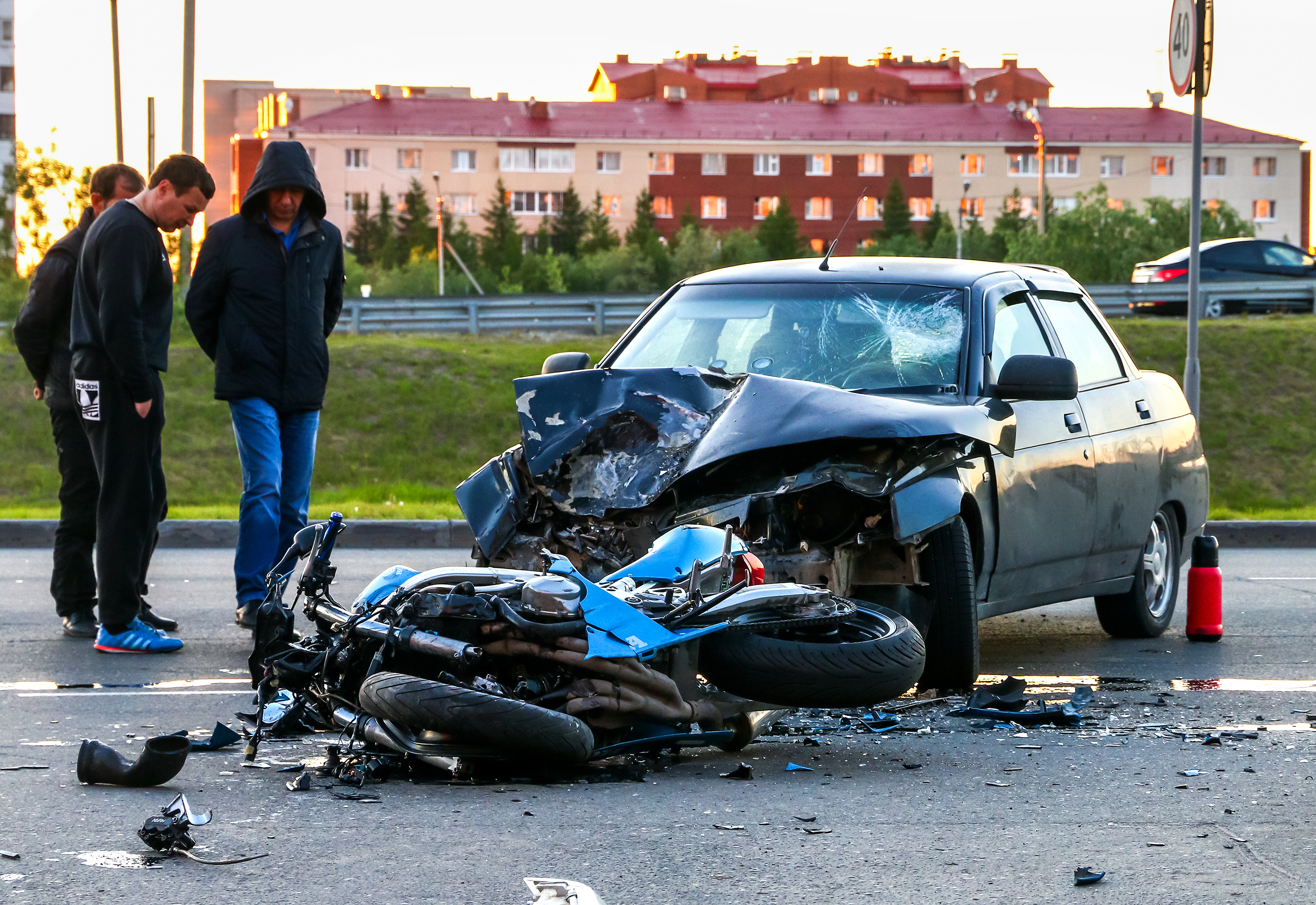
Understanding the physical factors that make motorcycle accidents so deadly is crucial for both prevention and legal proceedings. The 28-times higher fatality rate for motorcyclists compared to car occupants isn’t arbitrary – it’s the result of fundamental differences in vehicle structure, protection, and crash dynamics. Unlike passenger vehicles with crumple zones, airbags, and protective shells, motorcycles offer virtually no physical protection in a collision. This makes dealing with and reporting a car accident much different than doing the same after a motorcycle crash.
A motorcyclist’s body directly absorbs impact forces that would be distributed or absorbed by a car’s structure. This exposure, combined with the higher likelihood of ejection during a crash, creates a perfect storm of vulnerability. Additionally, motorcycles’ smaller profile makes them less visible to other drivers, particularly those impaired by alcohol. When alcohol-impaired driving enters the equation – a factor responsible for more fatal crashes than any other cause – the risks multiply exponentially. The impaired driver’s reduced reaction time, decreased alertness, and diminished cognitive abilities make them particularly dangerous to vulnerable road users like motorcyclists.
The Role of Protective Gear in Reducing Fatality Risks
While motorcycle accidents may be 28 times more likely to result in fatalities, proper protective gear can significantly improve survival odds. Helmets alone reduce the risk of head injury by 69% and death by 42%. However, many riders in Virginia choose not to wear proper protection despite these statistics.
In our experience representing motorcycle accident victims, we’ve seen how the presence or absence of proper gear becomes a critical factor in both injury severity and the complexity of legal claims. When building cases for our clients, we carefully document protective equipment usage to establish both the facts of the case and to counter potential arguments about rider contribution to injuries.
Multiple Causation: Untangling Complex Liability in Fatal Motorcycle Accidents
Fatal motorcycle crashes rarely have a single cause. Instead, they typically result from a combination of factors that create a perfect storm of danger. This complexity significantly impacts how liability is determined and how compensation claims are pursued. In Virginia, understanding these multiple causation scenarios is essential for building effective legal cases. When a motorcycle fatality occurs, investigators must examine driver behavior (including potential alcohol impairment), road conditions, vehicle performance, and environmental factors.
Each potential contributor needs to be evaluated not just in isolation but in terms of how it interacts with other factors. For example, a driver’s momentary inattention might not cause a fatal crash under normal circumstances. Still, when combined with excessive speed, poor visibility, and a motorcycle’s smaller profile, it becomes deadly. Similarly, a minor vehicle defect might be manageable in ideal conditions but catastrophic when combined with other risk factors.
When Alcohol Becomes a Fatal Factor in Motorcycle Accidents
Alcohol-impaired driving represents a particularly devastating factor in motorcycle fatalities. When a driver operates a vehicle under the influence, their ability to detect and respond to smaller vehicles like motorcycles is severely compromised. The science is precise: alcohol consumption leads to reduced reaction time, decreased alertness, impaired vision, and diminished cognitive abilities – all critical skills needed to share the road with motorcyclists safely.
In legal terms, establishing alcohol impairment creates a strong foundation for liability claims, as it clearly demonstrates negligence and often supports claims for punitive damages. Virginia law allows for enhanced penalties in cases involving drunk driving, which can translate to more substantial compensation for victims’ families. Evidence of alcohol impairment must be gathered quickly after an accident, making immediate legal representation crucial for preserving toxicology evidence and witness testimony.
Vehicle Defects and Mechanical Failures: Hidden Factors in Motorcycle Fatalities
While driver error and behavioral factors like alcohol impairment receive significant attention in motorcycle fatality cases, mechanical issues and vehicle defects often play a critical yet underrecognized role. This is well documented when looking over motorcycle accident statistics. These factors can either cause accidents directly or make otherwise survivable crashes fatal. For motorcyclists, whose safety depends entirely on their machine performing as expected, mechanical integrity is a life-or-death matter.
Vehicle defects contributing to motorcycle accidents may arise from manufacturing processes, product design flaws, or the absence of proper instructions or warnings. These issues create potential grounds for product liability claims against manufacturers, distributors, or maintenance providers. Common mechanical failures include brake malfunctions, tire blowouts, fuel system leaks, and steering mechanism failures. When these defects contribute to fatal accidents, they open additional avenues for compensation beyond standard negligence claims against other drivers.
Identifying and Documenting Mechanical Failures in Fatal Motorcycle Cases
Correctly identifying mechanical failures in fatal motorcycle accidents requires knowledge and prompt investigation. Critical evidence can be lost if the motorcycle is repaired, scrapped, or left exposed to the elements after a crash. A thorough mechanical investigation examines not just apparent damage but also maintenance records, recall histories, and the specific performance of components under crash conditions.
Critical analysis can determine whether a mechanical issue was a cause or consequence of the crash. For families pursuing wrongful death claims, establishing a mechanical contribution to the accident can significantly strengthen their case and potentially identify additional liable parties beyond other drivers. This expanded liability can be crucial for ensuring full compensation, especially in cases where the primarily responsible driver lacks adequate insurance coverage or when multiple factors contributed to the fatality.
Frequently Asked Questions
-
What makes Virginia motorcycle crashes so much more fatal than car accidents?
Motorcycle accidents in Virginia are 28 times more likely to result in fatalities compared to car crashes due to several key factors. Motorcycles lack the protective structures that cars provide—no steel frame, airbags, or seat belts. Riders experience direct impact forces that a vehicle’s structure would otherwise absorb. Additionally, motorcyclists are frequently ejected during collisions, leading to secondary impacts with roadways, objects, or other vehicles. The motorcycle’s smaller profile also makes it less visible to other drivers, particularly those impaired by alcohol or distracted. When alcohol-impaired driving enters the equation—a factor responsible for more fatal crashes than any other cause—the risks multiply significantly due to the impaired driver’s reduced reaction time and diminished abilities to notice smaller vehicles.
-
How can a Roanoke motorcycle injury lawsuit help after losing a loved one?
A motorcycle injury lawsuit can provide both financial compensation and a sense of justice after losing a loved one. Financially, a successful claim can cover immediate costs like medical bills and funeral expenses, as well as long-term financial impacts such as lost income and benefits the victim would have provided to the family. Beyond monetary aspects, legal action can establish accountability, potentially leading to changes that prevent similar tragedies. In cases involving alcohol-impaired drivers or vehicle defects, litigation can expose dangerous behaviors or product flaws. Many families find that the legal process, while challenging, provides closure by thoroughly investigating what happened and holding responsible parties accountable for their actions or negligence.
-
What are the most common causes of fatal motorcycle crashes in Virginia?
Fatal motorcycle crashes in Virginia typically result from multiple factors rather than a single cause. The most significant factors include alcohol-impaired driving, which impairs essential driving functions like reaction time and visual processing. Other factors include left-turning vehicles failing to yield to oncoming motorcycles, distracted driving reducing awareness of smaller vehicles, excessive speed limiting reaction time for all road users, and poor road conditions or hazards. These might be manageable for four-wheeled vehicles, but dangerous for motorcycles. Vehicle defects also play a significant role, whether from manufacturing flaws, design problems, or inadequate maintenance. Weather conditions and visibility issues further contribute to the risk profile. This multi-causal nature often complicates liability determination in legal proceedings, requiring a thorough investigation to identify all contributing factors.
-
How long do I have to file a Virginia motorcycle crash claim after a fatality?
In Virginia, wrongful death claims related to motorcycle fatalities must be filed within two years of the date of death, not the accident date. This statute of limitations is strict, and missing this deadline typically means permanently losing your right to pursue compensation. However, certain circumstances can modify this timeframe. For claims involving government entities (such as accidents caused by municipal vehicles or roadway defects), notice requirements may be as short as six months. Cases involving vehicle defects may fall under product liability statutes with different timelines. Additionally, if the deceased person had a personal injury claim in progress before their death, that claim may be converted to a wrongful death action with potentially different deadlines. Given these complexities, consulting with a Virginia motorcycle death attorney as soon as possible after a fatality is crucial to preserve all legal rights.
-
What compensation can a Roanoke motorcycle fatality lawyer help recover?
A skilled motorcycle fatality lawyer can help families recover several types of compensation. Economic damages include quantifiable losses such as medical expenses incurred before death, funeral and burial costs, loss of the deceased’s expected income and benefits, loss of inheritance, and the value of services the deceased would have provided. Non-economic damages address less tangible but equally essential losses such as the family’s mental anguish, loss of companionship, guidance, and support. In cases involving particularly egregious conduct, such as drunk driving, punitive damages may be available to punish wrongdoers and deter similar behavior. When multiple factors contributed to the fatality—such as both driver negligence and vehicle defects—a knowledgeable attorney can pursue claims against all responsible parties to maximize the compensation available to the grieving family.
Work with a Motorcycle Accident Lawyer
The aftermath of a fatal motorcycle accident is overwhelming for families trying to cope with both emotional trauma and complex legal questions. Working with a knowledgeable motorcycle accident attorney provides crucial guidance through this challenging process. An experienced lawyer can conduct thorough investigations to identify all contributing factors—from driver negligence and alcohol impairment to potential vehicle defects and roadway hazards. They can accurately calculate the full extent of damages, including both economic losses and the profound emotional impact of losing a loved one.
Attorneys familiar with Virginia’s motorcycle laws understand the state’s contributory negligence rules and how to counter potential arguments that might reduce compensation effectively. They can also navigate the complex process of dealing with multiple insurance companies and potentially liable parties. At Altizer Law, we understand the unique challenges of motorcycle fatality cases. We are committed to providing compassionate, comprehensive legal support while aggressively pursuing the compensation families deserve after such a devastating loss.
When life takes an unexpected turn, let Altizer Law be your compass through the legal storm. Reach out to us at 540.345.2000 or contact us to discuss how we can help you find justice and peace of mind. We’re here to guide you every step of the way.